OEM parts are made by or for Viking to the original spec, while aftermarket parts are third-party substitutes. On a Viking, OEM parts protect fit, performance and warranty, and they matter most for sealed-system, control and safety components. Aftermarket parts can save money on simple, non-critical items, but the savings rarely justify the risk on a premium appliance.
When a technician quotes a repair, the part is often the biggest line item, so the OEM-versus-aftermarket choice is a real one. On a five-figure Viking, the wrong part can cost more than it saves. This guide explains the difference, where each makes sense, and how parts choice affects your appliance’s life and warranty. Viking Repair Pro uses genuine Viking parts on the appliances it services.
What OEM and aftermarket actually mean
OEM stands for original equipment manufacturer, meaning the part is built to Viking’s exact specification. Aftermarket parts are made by other companies to fit the same models, often at a lower price and wider availability.
The gap between them is consistency. An OEM control board or burner matches the original tolerances every time, while aftermarket quality ranges from near-equal to poor depending on the maker. On a precision appliance, that consistency is what you’re paying for.
Where OEM parts are worth it
Some components are not worth gambling on. For anything tied to the sealed system, the control board, gas burners, or safety circuits, OEM is the right call on a Viking.
These parts carry the highest failure cost and the biggest safety stakes. A mismatched control board or gas valve can run hot, fail early, or behave unpredictably, which turns a one-time repair into a repeat visit. The premium build only performs as designed with parts made to that design.
Where aftermarket can make sense
Aftermarket isn’t always the wrong answer. For simple, non-critical parts like a generic water filter, a door bin, or a light bulb, a quality aftermarket option can save money with little downside.
The test is simple: if the part touches heat, gas, refrigerant, or the control system, choose OEM; if it’s cosmetic or accessory-level, aftermarket is defensible. A reputable technician will tell you honestly which category a part falls into.
How parts choice affects warranty and lifespan
Parts choice can affect coverage. Using non-OEM parts in a repair can complicate a manufacturer warranty claim, and a low-grade substitute that fails early shortens the appliance’s life and invites a second repair.
That’s why parts choice ties directly into the repair-or-replace math. A genuine part that keeps a built-in Viking running for another decade protects an expensive investment. See when to repair or replace a Viking appliance, and how this feeds how long Viking appliances last.
What to ask before you approve a part
A few questions keep you in control of the repair. Ask them before any part is ordered.
- Is this an OEM Viking part or an aftermarket substitute?
- Does the part carry a warranty, and for how long?
- If it’s aftermarket, is it a non-critical component where that’s appropriate?
- Will the choice affect any remaining manufacturer coverage?
A clear answer to each tells you whether the quote protects your appliance or just the bottom line. Genuine parts on critical components are the safer long-term value.
Frequently asked questions
Are OEM Viking parts worth the extra cost?
OEM Viking parts are worth the extra cost on critical components like the control board, sealed system, and gas burners, where fit and safety matter most. The higher price buys consistent performance and protects your warranty. For cosmetic or accessory parts, a quality aftermarket option can be a reasonable way to save.
Do aftermarket parts void a Viking warranty?
Aftermarket parts don’t automatically void a Viking warranty, but using non-OEM parts in a repair can complicate a future claim, especially if the part contributes to another failure. On an appliance still under warranty, OEM parts are the safer choice. Always confirm coverage terms before approving a non-OEM part.
How can I tell if a part is genuine Viking?
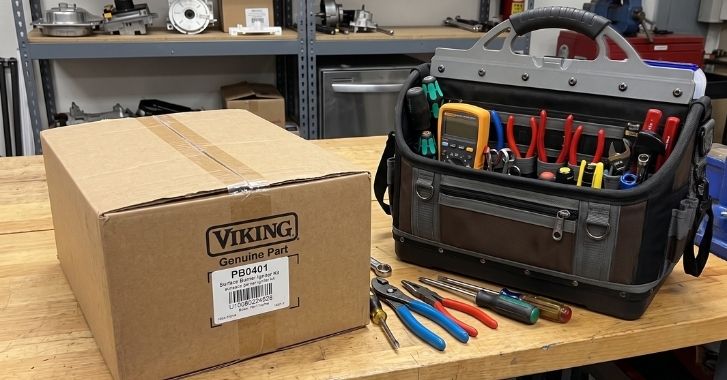
A genuine Viking part carries the correct part number for your model and usually comes in Viking or authorized packaging. The safest path is a technician who sources parts through authorized channels and matches them to your rating-plate model number. Ask for the part number and confirm it against your unit.
Protect your Viking with the right parts
On a premium appliance, the cheapest part is rarely the best value, especially where heat, gas, or the control system is involved. Choosing genuine parts on the components that matter keeps a Viking performing and protects its remaining life. Book a Viking repair with Viking Repair Pro, where critical repairs use genuine Viking parts.