
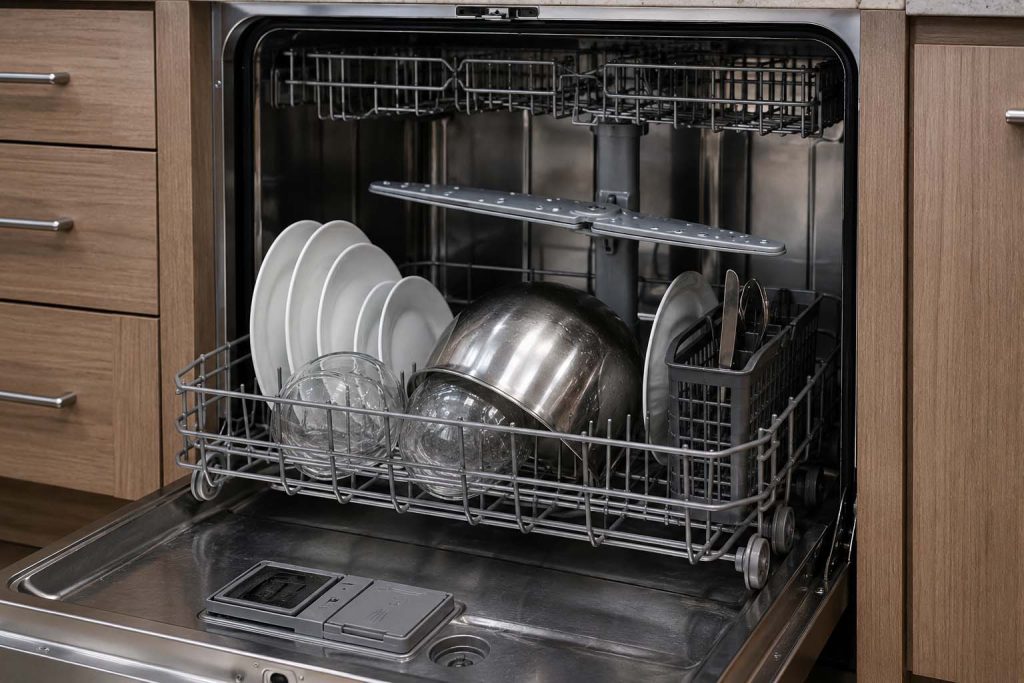
A Viking dishwasher that won’t clean usually points to clogged spray arms, a dirty filter, low water temperature, or the wrong detergent. Poor drying traces to spent rinse aid, a failed vent, or a bad heating element. Most of these causes are homeowner-fixable in under an hour.
When a high-end Viking dishwasher sends out gritty glasses or dripping plastic, the machine is rarely broken beyond repair. Nine times out of ten the wash system is starving for hot water, clean water flow, or working rinse aid. This guide walks through the quick checks first, then the part-level faults that need a technician, with honest price ranges so you know when a service call makes sense.
Symptoms: Cleaning vs. Drying Are Two Different Problems
Cleaning and drying fail for different reasons, so start by naming what you see.
- Dishes come out gritty, filmy, or with food stuck on — a cleaning problem (water flow, temperature, or detergent).
- Dishes are clean but wet, especially plastics — a drying problem (rinse aid, vent, or heating element).
- White chalky film on glassware — usually hard-water scale, not a machine fault.
- Cloudy etching that won’t wipe off — over-dosing detergent or soft water, not a failure.
Knowing which bucket you are in saves you from chasing the wrong part.
Quick DIY Checks First (Safety-First, 15–30 Minutes)
⚠️ Safety: Before you touch the filter, spray arms, or any internal part, switch the dishwasher off at the wall switch or the kitchen breaker. Do not put your hands near the heating element until the unit has cooled for at least 30 minutes after a cycle.
Work through these in order. Each one is free and reversible.
- Run the hot tap at the sink first. Viking dishwashers wash best around 120°F. Running the kitchen faucet hot for 20 seconds before you start the cycle clears cool water from the line so the machine fills hot.
- Clean the filter. Twist out the cylindrical filter at the tub floor, rinse it under hot water, and scrub the mesh with a soft brush. A clogged filter is the single most common reason dishes come out dirty.
- Free the spray arms. Spin both arms by hand. If they stick or the jets look blocked, pull each arm and poke the holes clear with a toothpick, then rinse.
- Check the rinse-aid dispenser. For drying complaints, an empty rinse-aid well is the top cause. Fill it and set the dosage to the middle or high position.
- Rethink loading and detergent. Don’t nest bowls or block the arms with oversized trays. Use fresh detergent — powder and pods lose potency when they sit in a humid cabinet for months.
- Wipe the door seal and vent. Food and grease on the gasket and drying vent hurt both wash quality and the dry cycle.
If dishes improve after these steps, the fix was maintenance, not a fault. If they don’t, move to part-level causes below.
Likely Part-Level Causes When Cleaning Still Fails
When the basics are clean and dishes are still dirty, one of these components is usually behind it.
Water-inlet valve. If the tub isn’t filling with enough water, the arms can’t spray with force. A weak or scaled inlet valve underfills the tub and leaves whole loads dirty.
Wash pump or circulation motor. This pump drives water up through the spray arms. When it wears out or partly seizes, pressure drops and the top rack cleans worst.
Chopper or drain issue carrying debris back. If soft food isn’t being ground and drained, it recirculates and redeposits on clean dishes.
Heating element (wash side). Some Viking models rely on the element to hold wash-water temperature. A failed element means cool water and greasy residue.
Hard-water scale. Mineral buildup coats the jets, element, and glassware. It reads like poor washing but is really limescale.
Likely Part-Level Causes When Drying Still Fails
Viking dishwashers dry using a combination of a heated element, a rinse-aid-assisted rinse, and a vent that releases moist air.
Empty or clogged rinse-aid dispenser. Rinse aid breaks water tension so it sheets off instead of beading. Without it, even a perfect machine leaves droplets.
Failed vent or vent fan. If the vent flap or its fan stops working, humid air stays trapped and condenses back onto dishes.
Burned-out heating element (dry side). A dead element means the final heated-dry phase never warms the load.
Wrong cycle or “energy-saver” dry. An eco or air-dry setting skips heated drying by design — check the selected cycle before assuming a fault.
Plastics dry worst on every dishwasher because they hold little heat; some hand-drying is normal even on a healthy Viking.
When to Call a Viking Pro
Some of the checks above are DIY. The following are technician territory, especially on a built-in luxury unit where a wrong part or a bent seal can turn a small fault into a bigger bill.
- The wash pump, inlet valve, or heating element needs testing or replacement.
- Dishes stay dirty after the filter, arms, and detergent are all ruled out.
- Water pools, leaks, or the unit trips a breaker.
- An error code appears on the display.
- The dishwasher is under warranty and DIY work could void coverage.
Viking Repair Pro sends manufacturer-trained technicians who specialize in Viking appliances only, diagnose the fault before quoting, and use the correct parts for built-in models. That focus matters on units where guesswork is expensive.
Cost and Transparency
All figures below are general estimates for planning only. Your final price depends on the model, part, and local rates — Viking Repair Pro confirms cost after a hands-on diagnosis.
A dishwasher repair is a standard-tier ticket even on a Viking — there is no luxury markup on the fix itself, only on the quality of parts and workmanship.
| Fix | Typical general estimate |
|---|---|
| Diagnostic / service call | $90 – $150 (often credited toward the repair) |
| Filter, seal, or rinse-aid parts | $20 – $120 |
| Vent or vent fan | $120 – $300 |
| Heating element | $150 – $350 |
| Water-inlet valve | $150 – $350 |
| Wash pump / circulation motor | $300 – $600 |
Repair-or-replace math: the common rule is to replace when a repair passes about 50% of a new comparable unit’s price. Dishwashers follow that straight math more than Viking’s built-in refrigeration or ranges do, so a $500+ pump job on an older machine is worth a second look before you commit.
Serving Your Viking, Same Day
Don’t keep running loads that come out dirty or wet — it wastes water, detergent, and your time, and can bake residue onto the tub. If the quick checks didn’t solve it, book a diagnostic.
Viking Repair Pro serves Newport Beach, Ventura, Chula Vista, Daly City, Las Vegas, Glendale, Longmont, and Gresham. Call (844) 988-0068 for same-day or next-day Viking dishwasher service, open Monday–Sunday, 7:00 AM – 8:00 PM.
Frequently Asked Questions
Why is my Viking dishwasher not cleaning the dishes?
A Viking dishwasher stops cleaning when spray arms clog, the filter fills with debris, or incoming water runs too cool. Hard-water scale, overloading, and old detergent also cut cleaning power. Clean the filter and spray-arm jets, run the hot tap before starting a cycle, and use fresh detergent. If dishes stay dirty, a worn wash pump or water-inlet valve may need a technician.
Why is my Viking dishwasher not drying?
Poor drying on a Viking dishwasher usually comes from an empty rinse-aid dispenser, since rinse aid helps water sheet off dishes. A blocked vent, a failed vent fan, or a burned-out heating element also leaves dishes wet. Refill rinse aid first, then check the vent and heating element. Plastic items dry worst and often need hand-drying regardless.
How often should I clean my Viking dishwasher filter?
Clean a Viking dishwasher filter every two to four weeks for average use, and weekly if you skip pre-rinsing or run heavy loads. A clogged filter is the most common reason dishes come out gritty or filmy. Twist out the cylindrical filter, rinse it under hot water, scrub the mesh with a soft brush, and reseat it firmly.
Does hard water stop a Viking dishwasher from cleaning?
Hard water reduces cleaning by leaving mineral scale on spray-arm jets, the heating element, and glassware. The chalky film looks like poor washing but is mineral buildup. Run an empty cycle with a dishwasher descaler or white vinegar monthly, use a rinse aid, and consider a water softener in very hard-water areas. Scale also shortens component life over time.
Can I run my Viking dishwasher while it isn’t cleaning well?
Running a Viking dishwasher that cleans poorly wastes water and detergent and can bake food residue onto dishes and the tub. Stop and clear the filter and spray arms first. If a bad pump or inlet valve is the cause, continued cycles may strain the motor. Fix the underlying issue or book a diagnostic before relying on it again.