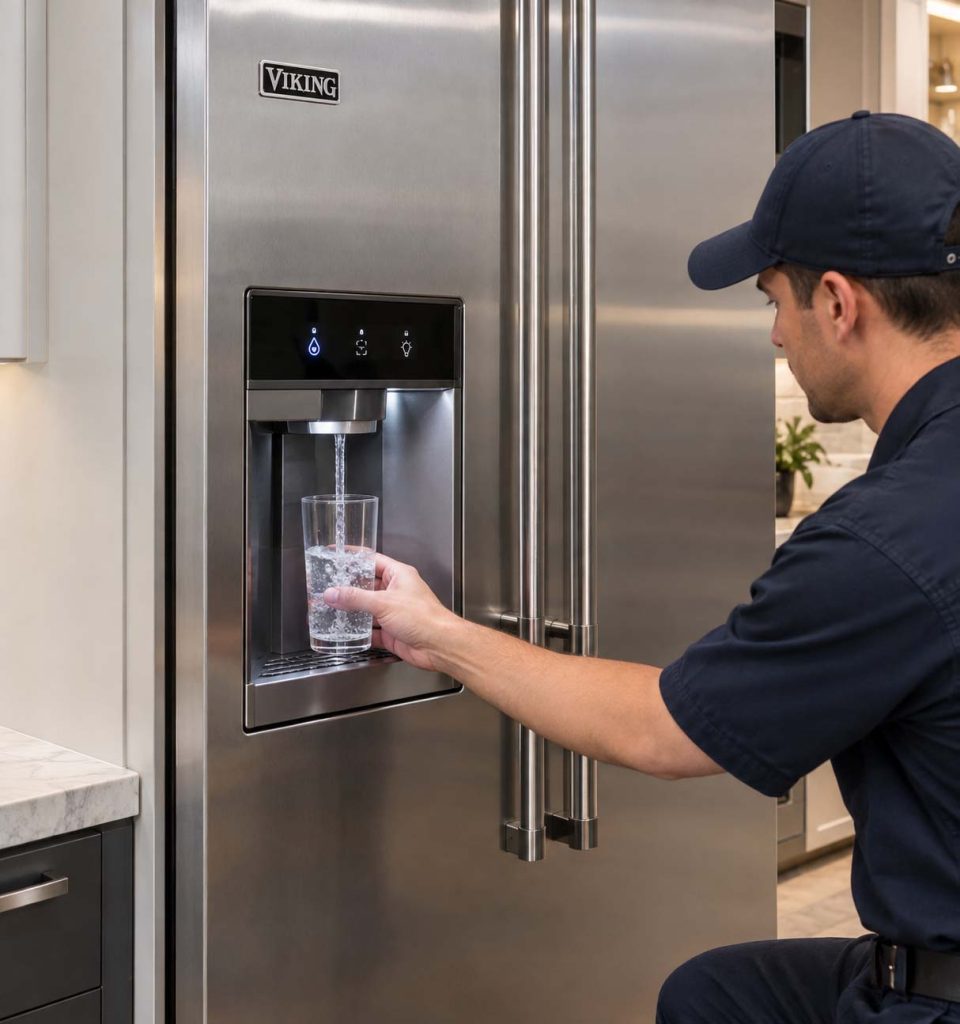

A Viking refrigerator that isn’t cooling usually points to dirty condenser coils, a stalled condenser or evaporator fan, blocked vents, or a failed defrost system. Start by confirming power and temperature settings, then clean the coils. If the compressor runs but the box stays warm, the sealed system or control board likely needs a technician.
A warm Viking fridge is stressful when the unit holds thousands of dollars of food and cost five figures to install. The good news: several causes are simple to check before anyone comes out. This guide walks the six checks in order, from the 2-minute fixes to the faults that need a pro. Viking Repair Pro services Viking refrigeration across California, Colorado, Nevada, Arizona, and Oregon, and you can reach Viking refrigerator repair service if the checks point to a sealed-system fault.
1. Confirm power, temperature and a recent door
Start with the obvious before assuming the worst. Check that the unit has power, the temperature is set near 37°F, and no door was left ajar overnight. A fridge recovering from a long door-open event can take 24 hours to return to temperature.
Roughly 1 in 5 “not cooling” calls trace back to a setting, a tripped outlet, or a recent overload of warm groceries. Rule these out first so you don’t pay for a visit you didn’t need.
2. Clean the condenser coils
Dirty condenser coils are the most common cause of weak cooling. The coils shed heat from the refrigerant, and when dust blankets them, the compressor runs hot and the box never gets cold enough. On many Viking models the coils sit behind the lower grille or at the rear.
Cleaning coils once or twice a year is the single best way to extend a refrigerator’s life, which is why it leads most maintenance guides. Brush and vacuum them, then give the unit a day to recover before judging results.
3. Check the condenser and evaporator fans
If the coils are clean and the box is still warm, listen for the fans. The condenser fan cools the compressor and coils, while the evaporator fan moves cold air into the fresh-food section. A fan that’s silent, grinding, or iced over stops cold air from circulating.
A failed fan motor is a common mid-cost repair, often in the $175 to $550 range nationally. It usually shows as a freezer that stays cold while the refrigerator section turns warm.
4. Look for a frost or defrost problem
Frost buildup on the back wall of the freezer points to a defrost-system fault. When the defrost heater, thermostat or timer fails, ice covers the evaporator coils and blocks airflow to the fridge. You may see a freezer that still freezes while the refrigerator slowly warms.
This is a technician repair, since the defrost components sit behind interior panels and need testing to pinpoint. Manually defrosting for 24 hours can confirm the cause but won’t fix it for long.
5. Inspect door seals and vents
A worn door gasket lets cold air leak out and warm, humid air in, which makes the compressor work overtime. Check the seal with a dollar bill: close the door on it, and if it slides out easily the gasket is weak. Also confirm interior vents between the freezer and fridge aren’t blocked by food.
A door seal replacement is an inexpensive fix, but a leaking seal left alone drives higher energy bills and uneven cooling.
6. When it’s the compressor or control board
If the coils are clean, the fans spin, and the box still won’t cool, the fault is likely the sealed system or control board. These are not DIY repairs. A compressor or sealed-system job is the costliest common refrigerator fix, often passing $1,000 on a built-in Viking.
At this point a diagnosis tells you the repair cost and whether it’s worth it. See current Viking refrigerator repair costs by component, and if the unit is older, weigh the numbers in our repair-or-replace guide.
Frequently asked questions
Why is my Viking refrigerator not cooling but the freezer works?
When a Viking freezer stays cold but the refrigerator is warm, the cause is usually a blocked evaporator fan, a defrost-system fault, or iced-over coils stopping airflow between the two sections. The compressor is still running, so the fix is airflow-related rather than a sealed-system failure. A technician can confirm which component is blocking the cold air.
How long does a Viking refrigerator take to get cold again?
A Viking refrigerator usually takes 4 to 24 hours to reach temperature after a repair, a settings change, or a long door-open event. Don’t judge cooling for at least a day after cleaning coils or adjusting controls. If it’s still warm after 24 hours with clean coils and working fans, schedule a diagnosis.
Is a refrigerator not cooling worth repairing?
A refrigerator that isn’t cooling is usually worth repairing when the unit is under 10 years old or built-in. Built-in Viking models cost $7,000 to $15,000 to replace, so even a sealed-system repair is a small share of that. Our repair-or-replace guide breaks down the math by age and repair size.
Get your Viking fridge cooling again
Most “not cooling” calls come down to coils, a fan, or the defrost system, and the first two checks here take minutes. When the box still won’t hold temperature after the simple fixes, the sealed system needs a trained eye, not guesswork. Book a Viking refrigerator diagnostic with Viking Repair Pro and get a written quote before any work begins.